


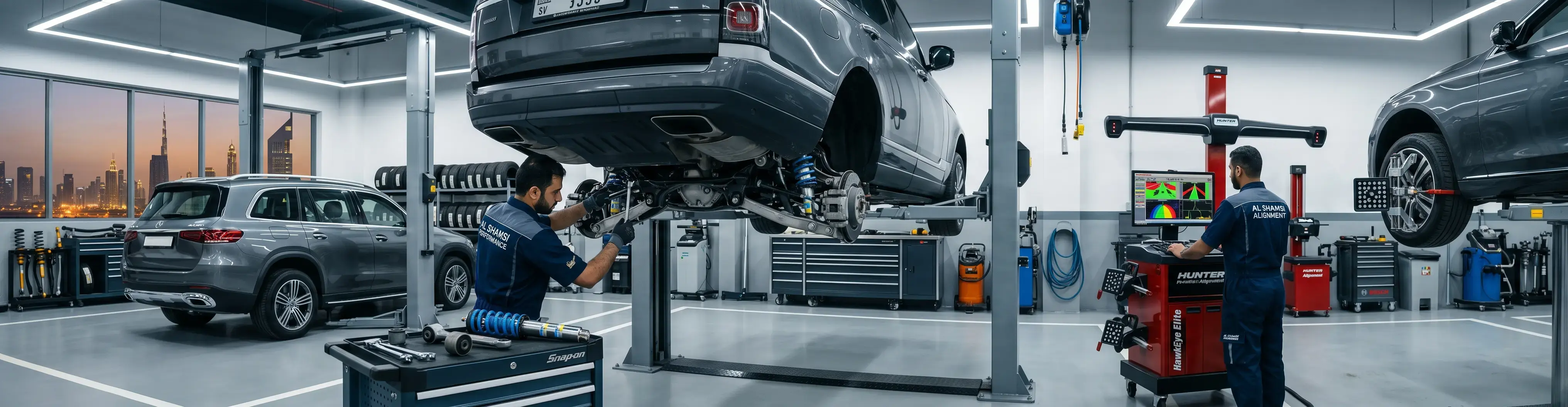


Understanding Car Suspension Repairing: A Complete Guide to Smooth Ride
Car Suspension Repairing doesn't just mean removing annoying squeaks and cabin rattles. It is an essential service that will keep your tires firmly on the road, giving you full control over your vehicle. A healthy suspension will protect you from unpredictable road surfaces in a city with high speeds, sharp turns and small parking spaces. Knowing how to recognize the warning signs and when to seek expert assistance will transform your daily commute into one that is smooth, safe and luxurious.
How to tell if your shock absorbers and struts are worn out - Car Suspension Repairing
Shock absorbers and struts usually come to mind when drivers think of a comfortable ride. They both control body movement but they have slightly different functions such as Car Suspension Repairing. A shock absorber works as a hydraulic component to dampen suspension bounce. However, a strut combines both a shock and heavy coil spring in one assembly.
Tracking their degradation is difficult because these parts are located beneath the wheel wells. You must pay close attention to any changes in driving behavior.
Your shocks may no longer be balancing the vehicle's weight. If your car sways back and forth after a speed bump for several seconds, it is likely that the hydraulic fluid inside has deteriorated or leaked. These components will lose their dampening force and your tires will hop on the road. This will reduce your braking power and make your car feel unsafe.
Control arms, ball joints, and tie rods: Car Suspension Repairing
The shock absorbs vertical impacts. A complex web of steel structural, rubber and pivoting joints controls the movements of the wheels forward, backward and laterally. These parts are hard at work under the frame, keeping your steering sharp and take care of Car Suspension Repairing.
Control Arms and Rubber Bushings
The control arms are the primary structural hinges that connect your wheel assembly with the main chassis of the vehicle. These arms are fitted with dense rubber bushings that isolate the cabin against harsh road vibrations.
Rubber dry-rots, cracks, and tears apart over time due to constant exposure to road grit, heat, and environmental conditions. You will hear a metallic clunk when bushings fail. This is because the metal arms shift out of position as you accelerate and clear bumps.
Ball Joints: the Crucial Pivot
Ball joints are the pivots that connect the steering knuckles to the control arms. They act like hip joints in humans. The ball joints allow you to steer your car while simultaneously moving the front wheels up and down.
Lubricated ball joints or those that are worn out will creak or click when they turn. This is because they carry heavy loads or need Car Suspension Repairing. When a worn-out ball joint snaps, the wheel assembly may fold outwards, causing a loss of control.
How a Car Suspension Repairing can accelerate tire wear and ruin alignment
Ignoring early warning signs that your suspension is wearing out can have a domino effect on your wallet and need Car Suspension Repairing. The alignment of your steering, suspension and tires is delicately mathematically balanced. This geometry will collapse the moment a bushing breaks or a strut slumps.
Tires no longer run parallel or flat to the road when suspension parts are excessively unapproved. Tire wear patterns are quickly created by this imbalance.
- Cupping & Scalloping: Worn-out shocks cause the tire to bounce along the road and create scooped out dips or wavy, bald patches on the tread. The roaring sound is similar to a wheel bearing failing.
- Edge Wear and Feathering: Bad bushings on the control arms cause the tire's toe to scrub or lean sideways (bad toe) or excessively inward (bad camber). The rubber will be completely stripped off the edge of a tire in a matter of kilometres. This can ruin incredibly expensive tires.
By investing in Car Suspension Repairing, you can protect your wheel alignment and preserve your tire tread. You will also avoid buying expensive replacements tires before they are due.
Restoring Ride Comfort: What To Expect From A Professional Car Suspension Repairing Service
Complete Car Suspension Repairing is an extremely specialized mechanical procedure that uses heavy-duty presses and computerized systems of alignment to restore your vehicle's smoothness to the factory.
Your technician will first carefully remove the worn assemblies, and then use specialized hydraulic tools in order to press out the old, stuck bushings. This is done to prevent damaging the structural control arms. Each and every replacement part, whether it's a heavy-duty spring, a gas strut or a new tie rod end, is carefully chosen to match your vehicle's exact weight and performance specifications.
After the installation of all hardware, your vehicle must be placed on a 3D computerized wheel aligning rack. All four wheels are fitted with high-definition sensors that track your suspension angles.
The technician will then make micro-adjustments on the steering links and control mounts to ensure that your car is aligned perfectly with factory specs. This final step is crucial to ensure that your steering wheel remains perfectly straight and that your car tracks perfectly. It also gives you the smooth, plush ride you have been craving.
Conclusion: Car Suspension Repairing
A bouncing or loose suspension can make every trip uncomfortable and dangerous. If your car is showing signs of wear and tear, such as a slight shift on the highway or uneven tire wear, it's important to address these problems early.
A professional Car Suspension Repairing diagnosis and repair will ensure that you get the maximum braking performance, the sharpest handling and legendary ride comfort. Do not let a rough ride ruin a good day or compromise safety. Today, schedule a multi-point suspension check and enjoy the smooth driving you deserve.
FAQs (Frequently Asked Questions) - Car Suspension Repairing
How often should my vehicle's suspension system be inspected?
You should inspect your suspension system every 10,000-15,000 km, or at every oil change and tire rotate. Early detection of a torn dust boot or slightly loose bushing will prevent dirt from damaging the internal joints. This will save you a large Car Repair bill in the future.
Do I need to replace both shock absorbers and just one?
It is best to replace shock absorbers or struts as a pair (either both front shocks, and both rear shocks). Installing a new shock on one side will result in a much higher dampening force than an older, worn-out shock on the other side. This imbalance can lead to highly unpredictable handling and uneven braking. It also causes strange tire wear.
What is the cause of that loud clunking noise when driving over speed bumps?
The most common cause of a loud metallic clanking noise over bumps are worn out control arm bushings and failed sway bars links. The metal components become less cushioned and tight when the rubber bushings crack, dry out, or fall off. The heavy metal suspension components can then slam against the vehicle's frame when you hit a bump.
After suspension repairs, is a wheel alignment required?
A computerized wheel alignment is mandatory when replacing any suspension components, including control arms, tie rods, and struts. The replacement of these components physically changes the angle and position of your wheels. If you drive without an alignment after a repair, your car will pull to one side. It can also ruin brand new tires in just a few short weeks.
What is the effect of bad suspension components on my vehicle's brake distance?
When you apply the brakes hard, worn-out shocks or struts can cause the vehicle's weight to move violently forward. This is known as nose diving. This extreme weight shift lifts the pressure off of your rear tires and reduces their traction, making it difficult for your vehicle's brakes to work properly. In an emergency, weak shocks can cause your vehicle's total stopping distance to increase by 10% to 15%.
Leave a comment
Your email address will not be published. Required fields are marked *